
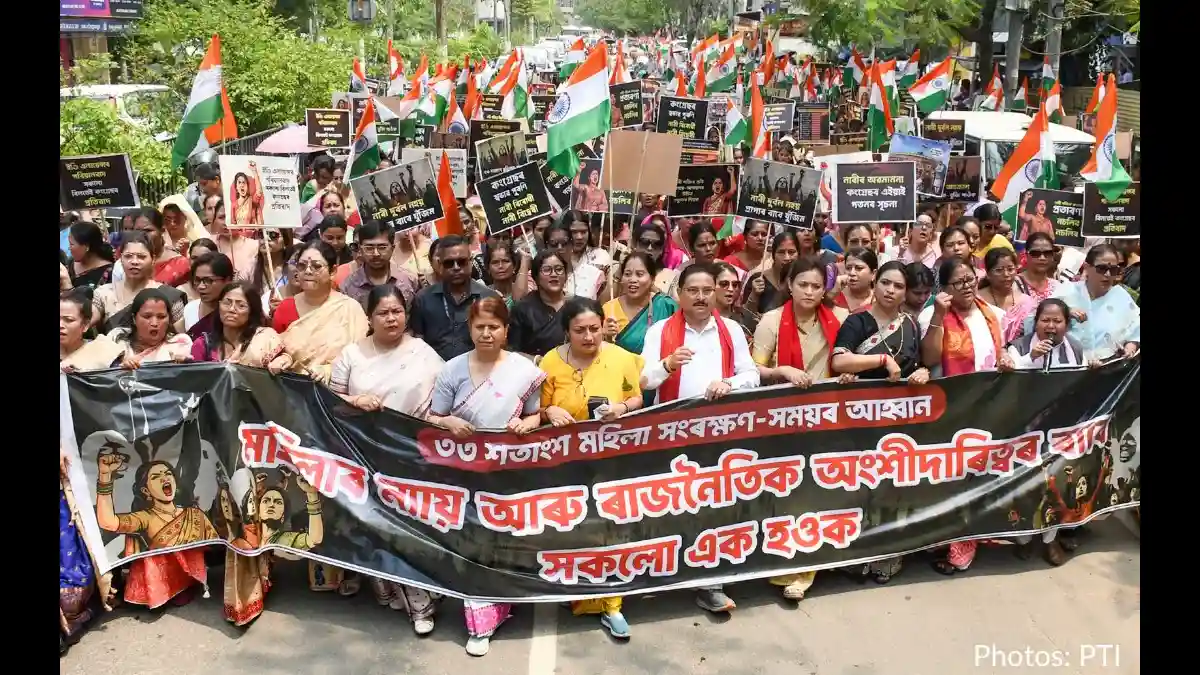
The defeat of the Constitution (131st Amendment) Bill in Parliament has sparked discussion in Guwahati, where political developments are closely followed, especially during the election period. The bill, aimed at implementing 33% reservation for women in Parliament and state assemblies, failed to secure the required two-thirds majority in the Lok Sabha.
For observers in Guwahati, the development goes beyond a legislative setback, raising questions about how political consensus breaks down despite broad agreement on key issues like women’s representation.
The failure of the Women’s Reservation-linked constitutional amendment in Parliament has triggered debate in Guwahati over representation and electoral reforms. Despite support in principle, the bill did not pass due to disagreements over linking the reservation with delimitation.
Guwahati Discussions Reflect National Debate
In Guwahati, the issue has become part of ongoing political conversations:
- Discussions around women’s participation in politics
- Questions over policy design and implementation
- Focus on how national decisions may affect state-level representation
As Assam’s political hub, Guwahati often mirrors national debates at the local level.
Core Issue: Reservation Linked to Delimitation
The bill proposed:
- 33% reservation for women in Parliament and assemblies
- Expansion of seats through delimitation based on the 2011 Census
- Structural changes to accommodate the reservation
However, this linkage became the central point of disagreement.
Why the Bill Failed
Despite support for women’s reservation in principle, the bill did not pass due to:
- Lack of the required two-thirds majority
- Opposition to linking the reservation with delimitation and seat expansion
- Differences over timing and implementation
This led to the collapse of the amendment in its current form.
What It Means for Guwahati
For Guwahati, the issue has specific relevance:
- Delimitation could affect city constituencies and boundaries
- Representation of women in local politics remains a key concern
- Urban voters are actively engaging with policy-level discussions
Broader Political Implications
The development highlights a recurring pattern in policymaking:
- Agreement on principle but disagreement on execution
- Political and procedural factors influencing outcomes
- Complex interplay between reform and electoral strategy
What Happens Next
- The bill will not move forward in its current form
- Political debate on women’s reservation is expected to continue
- Future proposals may revisit the issue with revised frameworks
Frequently Asked Questions
What was the Women’s Reservation Bill about?
It aimed to reserve 33% of seats in Parliament and state assemblies for women, linked to delimitation and seat expansion.
Why is this important for Guwahati?
Any changes in representation or constituency boundaries could directly impact Guwahati’s political structure and voter dynamics.