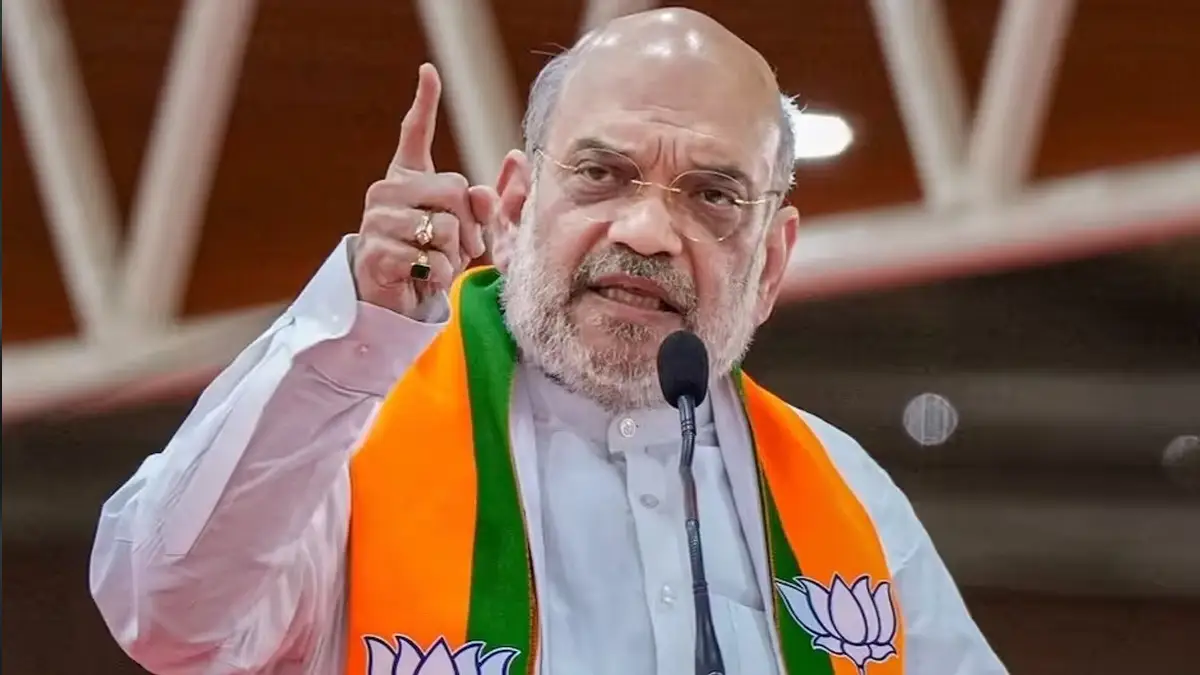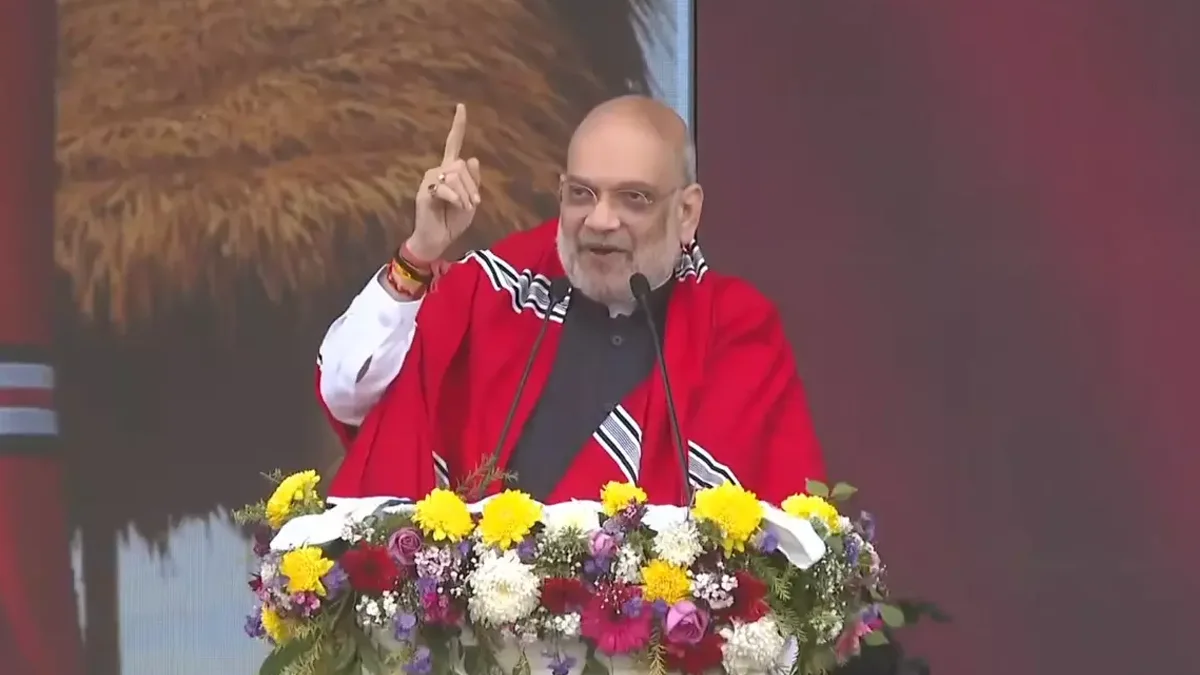
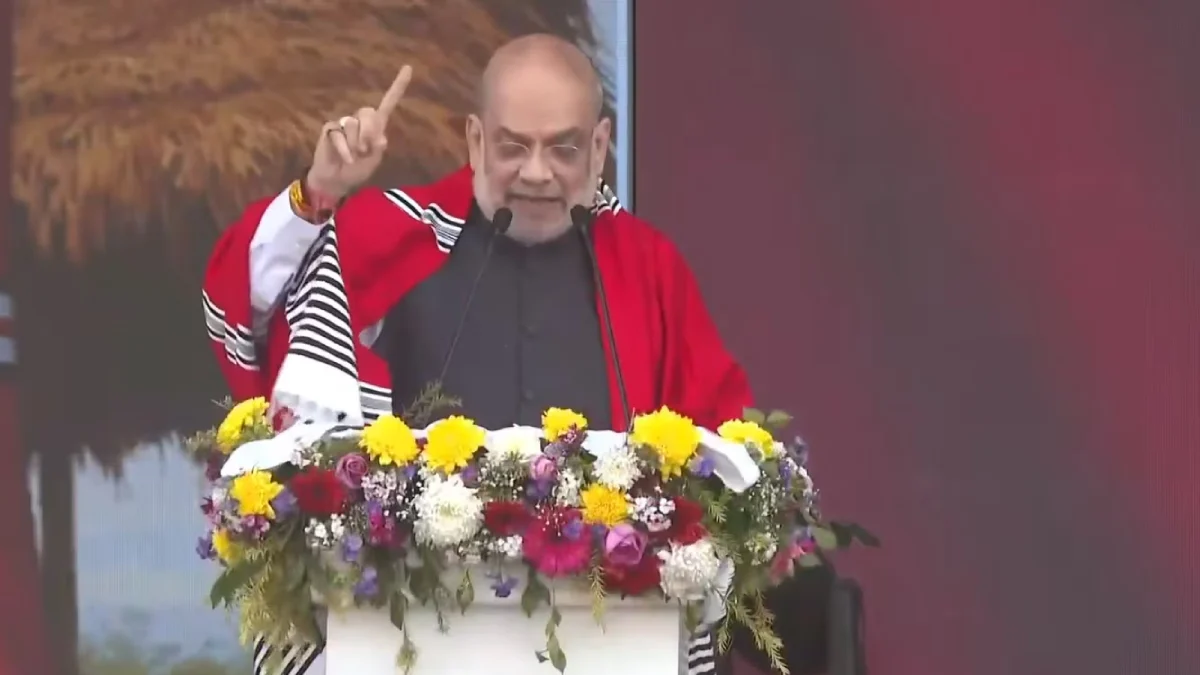
Union Home Minister Amit Shah on Tuesday alleged that years of “vote-bank politics” had enabled illegal infiltration in Assam, disrupting the state’s demographic balance and threatening its cultural identity. Addressing a large public gathering at Khanikar playground in Dibrugarh, Shah said illegal immigrants would be identified and deported “one by one.”
Speaking from an Assam-wide governance perspective with direct implications for Guwahati, Shah asserted that infiltration poses a serious risk to the state’s land, culture, and indigenous communities. He alleged that encroachment had extended to culturally significant sites linked to Srimanta Sankardeva and ecologically sensitive areas such as forest land around Kaziranga National Park.
Union Home Minister Amit Shah said illegal infiltration in Assam was enabled by vote-bank politics and would now be tackled through identification and deportation. Addressing a public rally in Dibrugarh, he warned that unchecked immigration threatens Assam’s culture, land, and indigenous communities, while reiterating the BJP’s commitment to safeguarding the state’s identity.
Key Assertions at the Dibrugarh Rally
Shah accused previous governments of allowing illegal immigration to continue for electoral gains, claiming this had altered Assam’s demographic balance. He said protecting indigenous rights and cultural heritage requires firm action against infiltration, adding that Assam’s interests could be safeguarded “only under the BJP.”
The Home Minister framed the issue as one affecting the entire state, including Guwahati, which remains Assam’s administrative and political hub. He indicated that enforcement and policy measures taken at the state level would have a statewide impact, from border districts to urban centres.
Infrastructure Push: Dibrugarh as Second Capital
During the visit, Shah laid the foundation stone for the Assam Legislative Assembly’s second complex in Dibrugarh, aimed at strengthening the city’s role as Assam’s second capital. The proposed complex will include residential facilities for MLAs and is expected to increase administrative activity in Upper Assam.
While the project is located in Dibrugarh, officials say the move complements Guwahati’s role by decentralising governance functions and easing administrative load on the state capital.
Assam’s Growth and Connectivity Agenda
Shah described Assam as a priority state in India’s infrastructure roadmap, highlighting ongoing and planned investments in roads, railways, and waterways. He also pointed to emerging sectors such as semiconductors as part of a broader push to position Assam as a growth engine for the Northeast.
From a Guwahati perspective, improved regional connectivity is expected to enhance trade, logistics, and administrative coordination, reinforcing the city’s position as the Northeast’s primary gateway.
Political Context
The remarks come amid renewed political focus on citizenship, border management, and indigenous rights in Assam. Shah reiterated the ruling Bharatiya Janata Party’s stance on infiltration, presenting it as central to the party’s governance agenda in the state.
Why This Matters for Guwahati
As Assam’s largest city and administrative centre, Guwahati is directly affected by policies on migration, infrastructure, and governance. Decisions announced in Upper Assam are likely to influence enforcement, resource allocation, and political discourse across the state.
What Happens Next
State and central authorities are expected to continue identification and deportation processes under existing legal frameworks. Work on the Dibrugarh Assembly complex will move into the construction phase, while infrastructure projects across Assam are set to progress in the coming months.
Frequently Asked Questions
Q1. What did Amit Shah say about illegal infiltration in Assam?
Amit Shah said infiltration was enabled by vote-bank politics and has threatened Assam’s culture and indigenous communities. He stated that illegal immigrants would be identified and deported one by one.
Q2. How does the Dibrugarh Assembly complex affect Guwahati?
The second Assembly complex decentralises governance by strengthening Dibrugarh as Assam’s second capital, potentially easing administrative pressure on Guwahati while improving statewide coordination.