
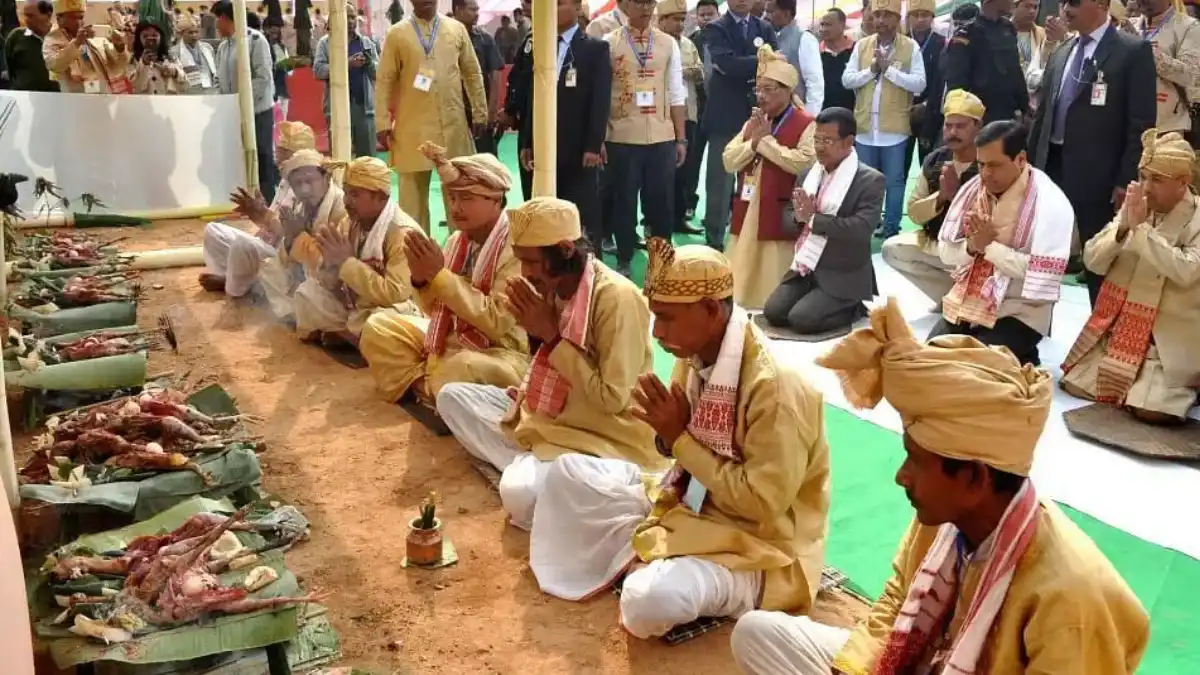
Every year on January 31, Assam observes Me-Dam-Me-Phi, a unique and deeply spiritual festival of the Tai Ahom community, dedicated to the remembrance and worship of ancestors.
Observed across Assam, including Guwahati and Upper Assam districts, the festival reflects the Ahom philosophy of gratitude, lineage, and continuity, making it one of the state’s most culturally significant traditions.
Me-Dam-Me-Phi is an annual Ahom festival observed in Assam on January 31 to honour ancestors. Rooted in Tai-Ahom beliefs, the ritual involves offerings of food and prayers to the departed, expressing gratitude and seeking blessings. The festival highlights Assam’s living ancestral traditions and cultural identity.
What Does Me-Dam-Me-Phi Mean?
The name Me-Dam-Me-Phi comes from the Tai language:
- Me – offerings
- Dam – ancestors
- Phi – spirits
Together, it signifies offering food and prayers to ancestral spirits, acknowledging their role in protecting and guiding the living.
How the Festival Is Observed
On Me-Dam-Me-Phi, families and community organisations perform rituals that include:
- Offering rice beer (haaj), meat, rice, and traditional dishes
- Lighting lamps and incense
- Reciting prayers invoking ancestral spirits
- Community gatherings and cultural programmes
Rituals are performed both at homes and community spaces, with larger ceremonies held at historically significant sites like Charaideo Maidams, the royal burial grounds of the Ahom kings.
Significance in Today’s Assam
Me-Dam-Me-Phi is more than a ritual; it is a living link between Assam’s past and present. The festival reinforces:
- Respect for ancestry and history
- Cultural continuity of the Ahom legacy
- Community bonding and identity
In cities like Guwahati, Me-Dam-Me-Phi is observed by Ahom organisations, cultural bodies, and families, keeping the tradition alive even in an urban setting.
Cultural and Historical Roots
The Ahoms ruled Assam for nearly 600 years, shaping its political, cultural, and social fabric. Me-Dam-Me-Phi originates from the Tai-Ahom belief that ancestors continue to influence the lives of descendants.
Historians note that this ancestor-centric worldview helped sustain strong social cohesion and respect for lineage in Assamese society.
Why Me-Dam-Me-Phi Matters Today
In an era of rapid modernisation, Me-Dam-Me-Phi stands as a reminder of:
- Cultural roots
- Intergenerational respect
- Assam’s pluralistic heritage
Cultural observers say the festival’s continued observance—especially among youth—shows Assam’s ability to balance tradition with modern life.
Greetings on Me-Dam-Me-Phi
On this auspicious occasion, Our Guwahati extends warm greetings to everyone observing Me-Dam-Me-Phi.
May the blessings of the ancestors bring peace, prosperity, strength, and harmony to all families and to Assam.
Frequently Asked Questions
Q1. When is Me-Dam-Me-Phi observed?
Me-Dam-Me-Phi is observed every year on January 31.
Q2. Which community celebrates Me-Dam-Me-Phi?
It is traditionally observed by the Tai Ahom community in Assam, though its cultural significance is recognised across the state.