
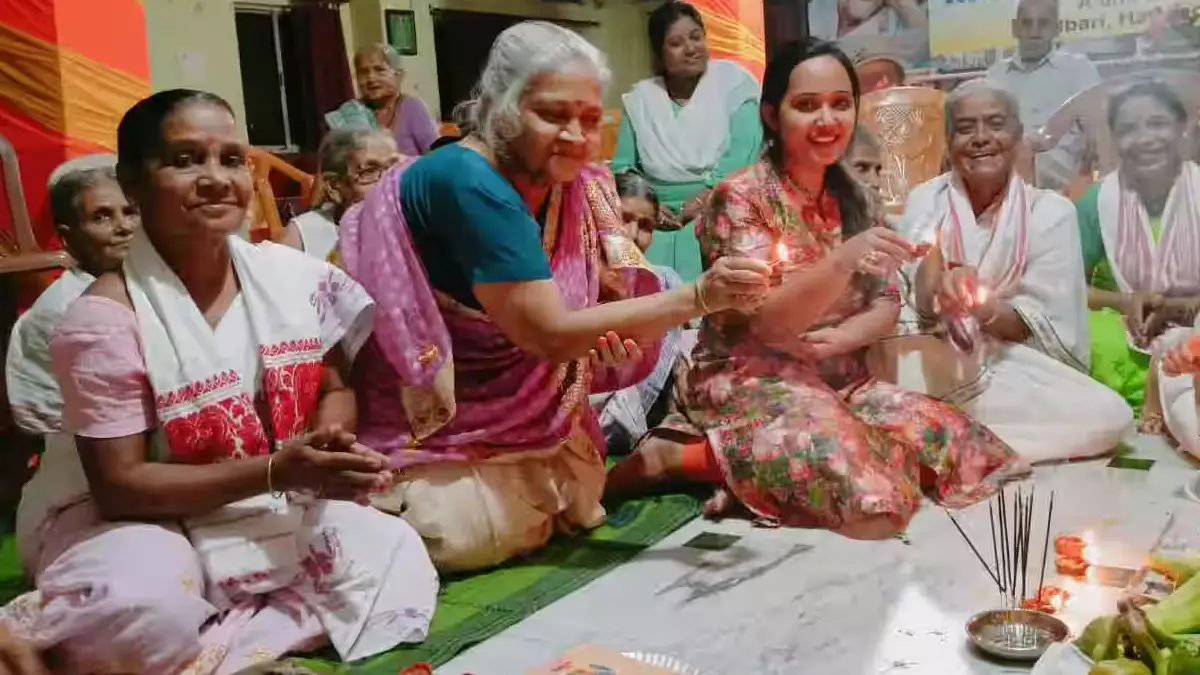
On a cold Uruka evening in Guwahati, the courtyard of an old-age home slowly comes alive. A kettle whistles near the kitchen. Someone laughs softly while arranging firewood for a small bonfire. The faint smell of til pitha drifts through the corridor.
Inside, elderly women sit wrapped in shawls, waiting for the fire to be lit. Many of them once cooked elaborate Bihu feasts for large families of their own. Now, they wait quietly, hoping the warmth of the flames will make the festival feel a little more like home.
Bhogali Bihu in Guwahati’s old age homes is marked by quiet rituals rather than grand celebrations. On Uruka night, elderly residents gather around small bonfires, share simple food, and revisit memories of past Bihus, finding comfort in belonging rather than spectacle.
A Different Kind of Bihu
Magh Bihu inside Guwahati’s old age homes is very different from the festival seen in bustling markets, college camps, or rural fields. There are no late-night feasts or crowded celebrations. Instead, everything moves at a gentler pace, shaped by age, health, and daily routines.
Bonfires are smaller. Meals are simpler. But the emotional weight of Bihu remains unchanged.
Caretakers say preparations often begin quietly, cleaning the courtyard, arranging seating, and planning food that residents can comfortably eat. For many elders, the anticipation matters as much as the celebration itself.
Memories That Refuse to Fade
As the fire crackles, conversations turn to earlier years of village courtyards, family gatherings, and nights spent cooking through Uruka. Some recall pounding rice, shaping pithas, or waking children before dawn for Magh Bihu rituals.
Though circumstances have changed, the bond with Bihu remains deeply personal. For many residents, the festival reconnects them to a time when they were caregivers, hosts, and central figures in family celebrations.
Belonging Over Celebration
Here, Bihu is less about festivity and more about belonging. The act of sitting together, sharing warmth, and acknowledging the day carries meaning. Even small gestures, such as serving tea, lighting the meji, or offering til pitha, become reminders that they are not alone.
Caregivers say these moments often bring visible emotional comfort to residents, especially those who rarely receive visitors during festivals.
Why This Matters for Guwahati
As Guwahati grows and family structures change, old age homes have become an important part of the city’s social fabric. Festivals like Bhogali Bihu highlight not just cultural continuity, but also the quiet spaces where tradition survives away from public attention.
These celebrations remind the city that Bihu is not only about abundance and feasts, but also about inclusion, memory, and care.
What Happens Next
As Uruka night fades, the fire dies down, and residents return indoors. The next morning, Magh Bihu is observed in quieter ways, such as simple meals, shared greetings, and familiar songs.
But for many inside these homes, that brief Uruka evening leaves behind something lasting: the feeling that, for a moment, Bihu came home to them.
Frequently Asked Questions
Q1. How is Bhogali Bihu celebrated in Guwahati’s old age homes?
It is celebrated quietly with small bonfires, simple food, and shared time, adjusted to residents’ health and routines.
Q2. Why is Bihu important for elderly residents?
Bihu reconnects them to memories of family life, tradition, and belonging, offering emotional comfort even without grand celebrations.