
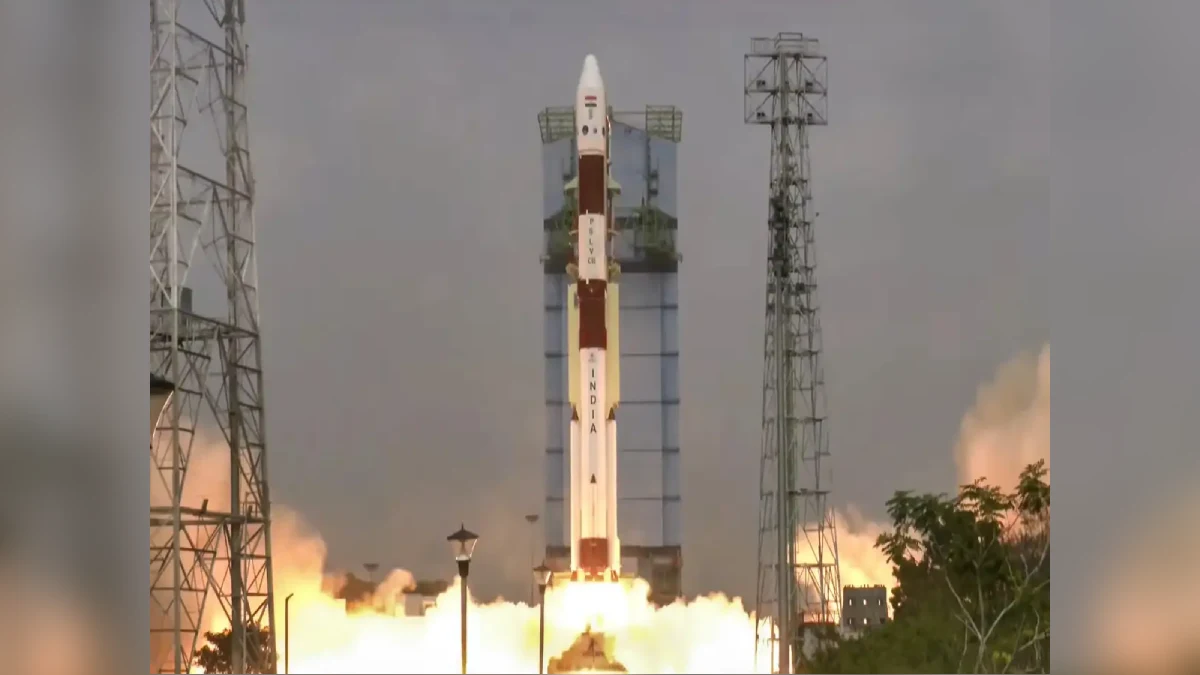
Indian Space Research Organisation (ISRO) began its 2026 launch calendar with a mission that carried a strong Guwahati connection. A student-developed satellite from Assam Don Bosco University, based near Guwahati, was successfully sent into space aboard the PSLV-C62 mission on Monday.
The satellite, named LACHIT-1, is the first satellite from the Northeast region to be launched into space, marking a landmark moment for Assam’s academic and technology ecosystem.
ISRO’s first mission of 2026 successfully launched LACHIT-1, a student-built satellite from Assam Don Bosco University near Guwahati, aboard PSLV-C62. The satellite became the first from the Northeast to reach space, highlighting the region’s growing role in India’s national space and technology programme.
Successful Launch from Sriharikota
The PSLV-C62 lifted off from the Satish Dhawan Space Centre, completing a 108-minute mission. The rocket placed the primary payload, the Earth observation satellite EOS-N1, into a sun-synchronous orbit at an altitude of approximately 505 kilometres.
Along with EOS-N1, the mission carried 14 other satellites and a re-entry capsule, including LACHIT-1 as a secondary payload. ISRO confirmed that all stages of the launch vehicle performed nominally.
LACHIT-1: A Guwahati-Driven Student Mission
LACHIT-1 was developed by a 50-member student team from Assam Don Bosco University. The satellite is named after Lachit Barphukan, reflecting Assam’s historical legacy and its growing engagement with advanced technology.
University officials said the project represents years of student-led research, design, and systems integration, demonstrating that space-grade innovation can emerge from academic campuses in and around Guwahati.
Mission Significance for ISRO
The PSLV-C62 mission was the 64th flight of ISRO’s Polar Satellite Launch Vehicle and the fifth mission of its PSLV-DL configuration. The successful launch also helped reinforce confidence in the PSLV programme following the partial failure of the PSLV-C61 mission in 2025.
The mission carried experimental satellites from Indian startups, academic institutions, and overseas partners, testing technologies such as:
- Hyperspectral Earth observation
- In-orbit data processing
- Satellite servicing concepts
- IoT-based applications
- Controlled atmospheric re-entry systems
Why This Matters for Guwahati and Assam
For Guwahati, LACHIT-1’s launch places the city on India’s space innovation map. It highlights how higher education institutions in Assam are increasingly contributing to national scientific missions rather than remaining limited to regional roles.
Observers say the achievement could encourage more students from Guwahati and the Northeast to pursue careers in aerospace, satellite engineering, and applied sciences.
What Happens Next
ISRO will continue monitoring all secondary payloads, including LACHIT-1, as they begin their in-orbit operations. Assam Don Bosco University’s team is expected to analyse data and performance metrics from the satellite over the coming weeks.
Further details on LACHIT-1’s mission objectives and operational lifespan are likely to be shared as the satellite begins its functional phase.
Frequently Asked Questions
Q1. What is LACHIT-1, and who built it?
LACHIT-1 is a student-built satellite developed by Assam Don Bosco University near Guwahati, making it the first satellite from the Northeast to be launched into space.
Q2. Which rocket carried LACHIT-1 into space?
LACHIT-1 was launched aboard ISRO’s PSLV-C62 mission from the Satish Dhawan Space Centre in Sriharikota.