Parking on footpaths and sidewalks continues to remain a persistent civic issue across Guwahati, causing daily inconvenience to pedestrians and raising serious safety concerns, despite repeated enforcement drives by civic authorities.
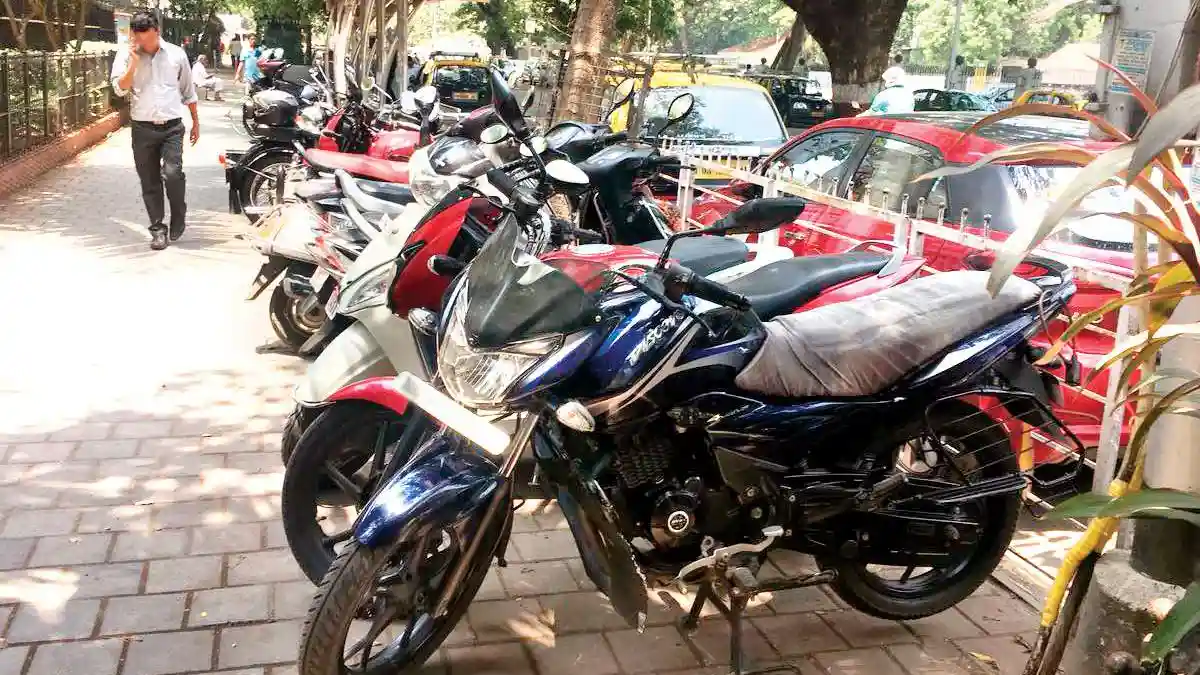
Across several localities, two-wheelers are routinely parked on footpaths and over covered drains, spaces originally built to ensure safe pedestrian movement and protect underground drainage infrastructure. Residents say the problem has shown little improvement even after policy measures meant to discourage illegal parking.
What is the issue?
Footpaths in Guwahati are increasingly being used as informal parking zones by two-wheelers, forcing pedestrians to walk on busy roads. Despite the Guwahati Municipal Corporation removing parking fees in designated areas, enforcement remains weak and illegal parking persists across key stretches of the city.
Areas most affected
Residents and commuters identified GS Road, Ulubari, and Paltan Bazar as some of the worst-hit areas. During peak hours, footpaths in these locations are often completely blocked by parked two-wheelers, roadside vendors, and makeshift stalls.
With walkable space reduced or eliminated, pedestrians are pushed onto the main carriageway, exposing them to fast-moving traffic.
Safety concerns for vulnerable groups
Locals say the situation poses heightened risks for women, children, senior citizens, and persons with disabilities. With no continuous footpaths available, even short walks become hazardous.
“The footpath is either broken or occupied by vehicles. We are left with no option but to walk on the road,” a commuter from Ulubari said.
Enforcement gaps and confusion
The issue has persisted despite repeated drives by the Guwahati Municipal Corporation. Earlier, the GMC removed parking fees for two-wheelers in designated parking areas to discourage riders from parking on sidewalks.
However, residents allege that monitoring remains sporadic and reactive, allowing violations to continue unchecked.
Adding to the problem, commuters claim that some designated parking areas continue to illegally charge parking fees, despite official instructions prohibiting such charges. This has reportedly pushed many riders to avoid formal parking spaces altogether and opt for footpaths instead.
Encroachments worsen the problem
In several localities, roadside vendors and temporary shops have also encroached upon footpaths, further shrinking pedestrian space. Residents say the lack of coordinated action against both illegal parking and encroachment has made footpaths unusable in many parts of the city.
What happens next?
Residents are calling for consistent enforcement, clear signage, and penalties for repeat offenders, along with action against illegal parking fee collection. Civic officials are yet to announce any fresh city-wide measures, but locals say sustained action, not periodic drives, is key to restoring pedestrian safety.
Frequently Asked Questions
Commuters cite convenience, lack of monitoring, and continued illegal parking fee collection at some designated areas as reasons for avoiding official parking zones.
GS Road, Ulubari, and Paltan Bazar are among the worst affected, especially during peak traffic hours.