
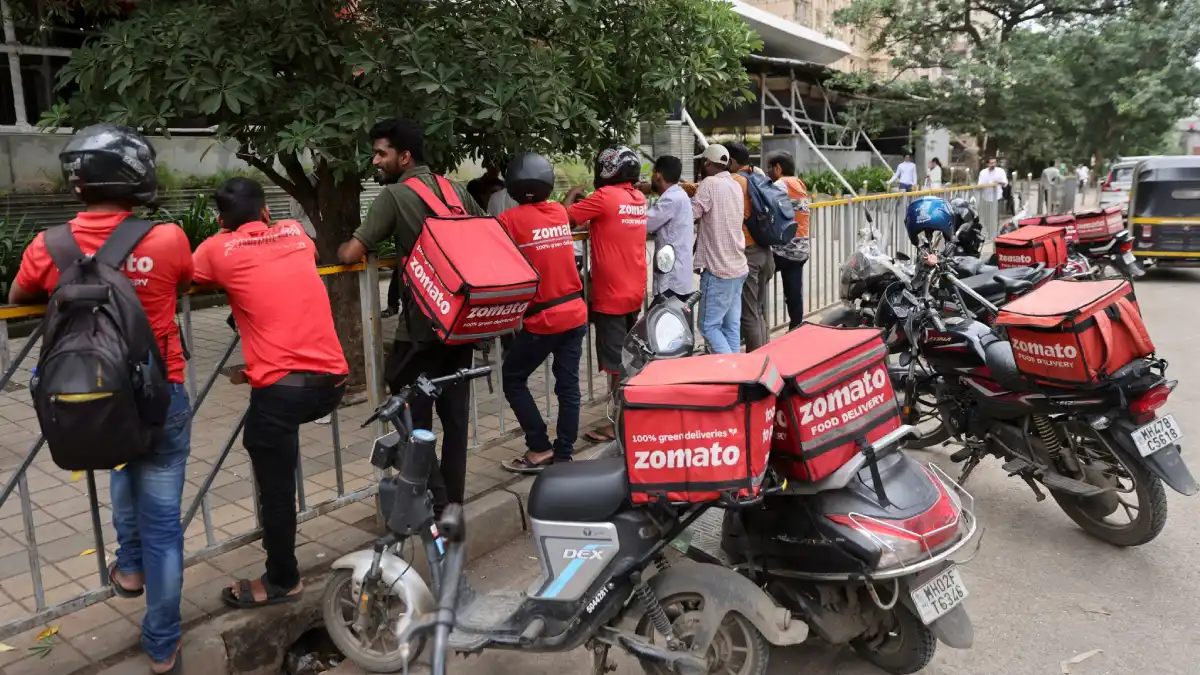
The Economic Survey 2025–26, tabled in Parliament on January 29 by Finance Minister Nirmala Sitharaman, has raised concerns over low incomes and weak protections in India’s gig economy, calling for stronger policy intervention.
The findings have direct implications for Guwahati, where thousands of workers depend on app-based delivery, ride-hailing, logistics, and freelance digital work as a primary source of income.
The Economic Survey 2025–26 warns that 40% of gig workers in India earn less than ₹15,000 a month and face income instability due to platform control over pay and work allocation. The report calls for minimum pay standards and social security issues increasingly relevant for Guwahati’s growing gig workforce.
What the Economic Survey Says
The Survey notes that digital platforms now exercise disproportionate control over pay structures, task allocation, and job continuity, often leaving workers with limited bargaining power.
It warns that while the gig economy has expanded rapidly, income security and worker protections have not kept pace, increasing vulnerability among workers who rely entirely on such platforms.
Why This Matters in Guwahati
In Guwahati, gig work has become a key employment option for young people, migrants from nearby districts, and workers transitioning from informal jobs.
Delivery riders, app-based cab drivers, and platform-linked service workers are now a common sight across areas such as GS Road, Beltola, Paltan Bazaar, and Maligaon. Many depend on daily incentives and peak-hour bonuses to make ends meet.
Local worker groups say income volatility, combined with fuel costs, vehicle maintenance, and platform commissions, often pushes monthly earnings below sustainable levels.
Key Concerns Highlighted
The Economic Survey identifies several structural risks faced by gig workers:
- 40% earn less than ₹15,000 per month
- No assured minimum pay per hour or per task
- No compensation for waiting time between jobs
- Difficulty accessing credit due to unstable income
- Limited skill upgradation opportunities
- Growing fears of job displacement due to AI and automation
These challenges are particularly acute in tier-2 cities like Guwahati, where alternatives to gig work remain limited.
What the Survey Recommends
To reduce exploitation and income instability, the Survey urges governments to:
- Introduce minimum pay standards per hour or per task
- Prevent companies from bypassing mandatory worker benefits
- Ensure compensation for idle or waiting time
- Expand portable social security benefits
- Promote financial literacy and emergency savings schemes
- Improve access to low-cost credit for gig workers
Such measures, the Survey says, could help narrow the gap between gig work and formal employment.
“Real Choice,” Not Compulsion
“Gig-economy policy should aim to ensure that workers have real choice,” the Survey notes, warning against a system where people are pushed into gig work due to lack of alternatives, skill mismatches, or absence of a safety net.
For Guwahati, experts say this means aligning urban employment growth with skills training, social security coverage, and regulatory oversight.
What Happens Next
While the Survey does not announce immediate policy changes, its recommendations are expected to feed into future labour and digital economy reforms.
Any move toward minimum pay norms or social security for gig workers could directly affect thousands of workers across Guwahati who rely on platform-based jobs for daily income.
Frequently Asked Questions
The Survey states that around 40% of gig workers earn less than ₹15,000 per month.
Guwahati has a rapidly growing gig workforce in delivery, transport, and services, making income stability and worker protections a key urban concern.