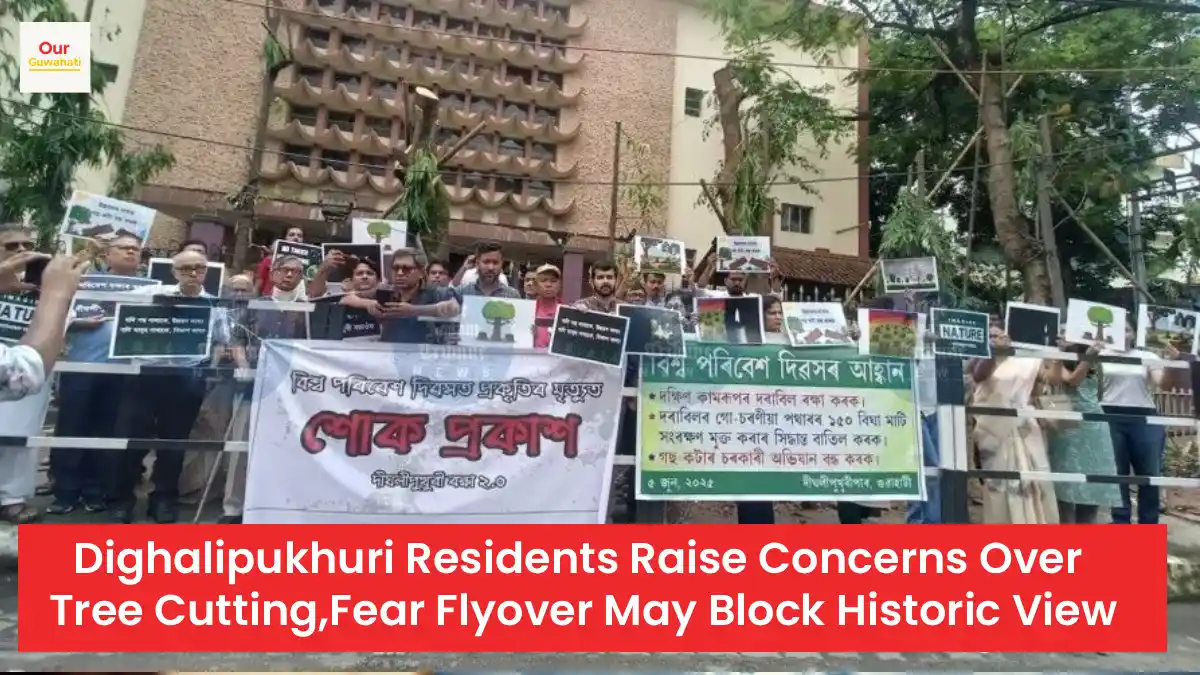
Guwahati, Sept 26: As construction work for the new flyover near Dighalipukhuri progresses, residents living in the area have raised concerns that the project could compromise the heritage and greenery of one of Guwahati’s most iconic landmarks. Allegations have surfaced that trees, including old ones, were cut down during the initial phases of construction, sparking a debate over the balance between urban development and environmental preservation.
Residents’ Concerns
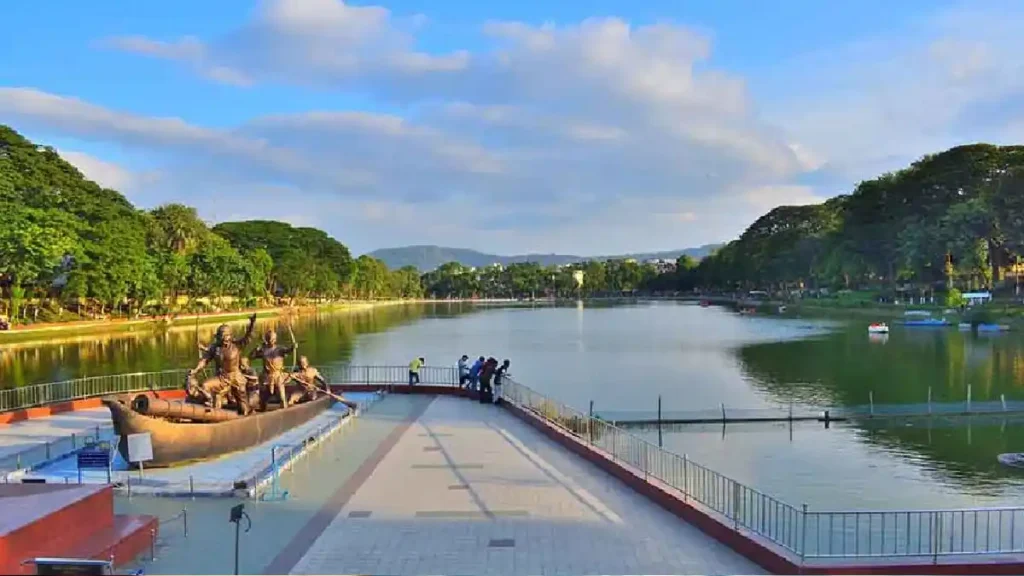
Locals said that while they noticed workers clearing the area, there was no official communication about whether the trees were trimmed or permanently cut. Many fear that if the flyover structure rises alongside the water body, it could obstruct the open view of Dighalipukhuri, long regarded as a breathing space in the heart of the city.
A resident said, “We heard that trees were cut, including some old ones. What worries us more is that if the flyover comes up, it might block the view of Dighalipukhuri.”
Another added, “Dighalipukhuri has always been a place where people come to breathe freely. Any change that blocks its view will take away its charm.”
Heritage vs. Development
Dighalipukhuri, with its historic significance and cultural presence, is not just a water body but a symbol of Guwahati’s heritage. Citizens now question whether the development project is being pursued with adequate safeguards for heritage preservation and environmental balance.
What’s Next?
While the government has positioned the flyover project as part of its plan to ease traffic congestion in central Guwahati, environmentalists and heritage activists are calling for greater transparency and consultation with local residents to ensure the city’s heritage is not compromised.
With both development and preservation at stake, Dighalipukhuri finds itself at the center of Guwahati’s ongoing debate over what kind of city its citizens want to build for the future.