From Guwahati, the Union Budget 2026 has brought renewed attention to one of Assam’s most valuable yet under-structured natural assets, agarwood. Union Finance Minister Nirmala Sitharaman, while presenting the Budget on Sunday, February 1, announced targeted support for agar trees in Assam and the Northeast, signalling a shift towards high-value, farm-linked income generation.
For policymakers and industry observers in Guwahati, the announcement is being seen as a long-overdue recognition of a sector where Assam already holds a dominant position but has struggled to unlock its full economic potential.
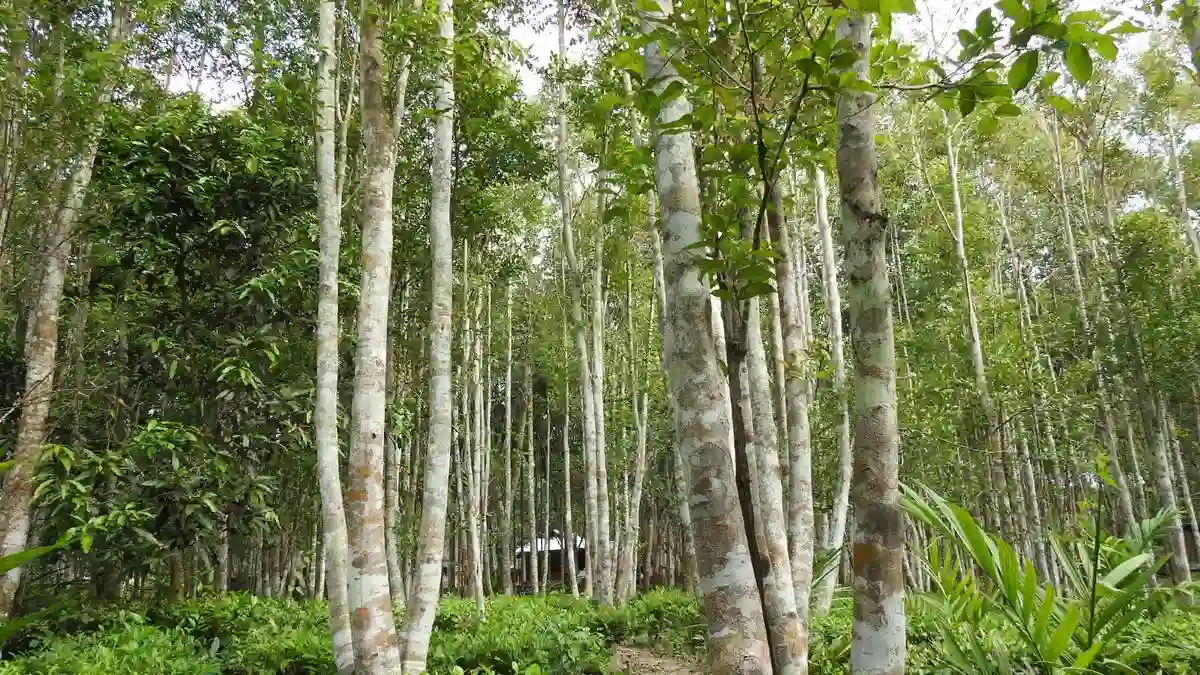
Union Budget 2026 has announced support for agarwood cultivation in Assam and the Northeast to boost farm income and employment. With over 80 per cent of India’s agarwood resources located in Assam, the move is expected to strengthen value chains, formalise the sector and expand export opportunities from the region.
What the Budget Announcement Says
In her Budget speech, Sitharaman said the Centre would support high-value crops across different regions, explicitly naming agar trees in the Northeast.
“We will support high-value crops such as coconut, sandalwood, cocoa and cashew in our coastal areas. Agar trees in North East and nuts such as almonds, walnuts and pine nuts in our hilly regions will also be supported,” she said.
The announcement positions agarwood alongside some of India’s most commercially valuable plantation crops.
Why Agarwood Matters to Assam
From a Guwahati perspective, agarwood is not just an agricultural crop—it is a strategic economic resource.
Assam accounts for around 81 per cent of India’s agarwood plantations, with Tripura contributing another 11 per cent. Together, the two states dominate a sector whose products—especially oud oil—are in high demand in:
- Middle Eastern incense markets
- Luxury perfumery and wellness industries in Europe and the US
- Traditional medicine systems across Southeast Asia
Industry estimates suggest that premium-grade agarwood can fetch prices comparable to, or even higher than, gold.
A High-Value Sector Still Largely Informal
Despite Assam’s dominance, Guwahati-based economists note that the agarwood sector remains largely informal and fragmented.
Most cultivation and resin extraction still rely on:
- Traditional practices
- Small-scale growers
- Limited scientific intervention
- Weak access to organised markets and exports
This has meant that farmers often capture only a fraction of the value generated further down the supply chain.
What Budget Support Could Change
Experts in Guwahati believe Budget backing could help:
- Formalise agarwood plantations and harvesting
- Encourage scientific inoculation and quality control
- Create processing and distillation units within Assam
- Improve traceability and export compliance
Such steps could shift Assam from being a raw-material supplier to a value-added producer, retaining more income locally.
Employment and Rural Impact
The Centre has linked agarwood support to farm income diversification and job creation. For Assam, this could translate into:
- New livelihood options in rural districts
- Skill-based employment in processing and distillation
- Reduced dependence on low-return crops
Guwahati, as the state’s commercial hub, is expected to play a key role in aggregation, certification, finance and exports.
Expanding Beyond Assam
While Assam remains the core, other Northeastern states Manipur, Nagaland, Meghalaya, Arunachal Pradesh, Mizoram and Sikkim are emerging as contributors. Budget support could encourage a regional agarwood value corridor, coordinated through Guwahati’s trade and logistics networks.
What Happens Next
Detailed implementation guidelines are expected to follow, outlining:
- Eligibility for farmer support
- Plantation and processing incentives
- Market linkage and export facilitation
For stakeholders in Guwahati, the real test will be whether policy intent translates into on-ground formalisation and farmer-level income gains.
Frequently Asked Questions
Q1. Why is agarwood important for Assam’s economy?
Assam holds over 80 per cent of India’s agarwood resources, and its products have high global demand, making it a major income and export opportunity.
Q2. How could Budget 2026 support changing the sector?
By formalising cultivation, improving processing, and enabling value addition and exports, farmers could earn significantly higher and more stable incomes.