A previously unknown species of blind fish has been discovered in the Goalpara district of Assam, marking the first confirmed groundwater-dwelling fish ever recorded in Northeast India and the Eastern Himalayan region. The species, named Gitchak nakana, was identified by an international team of scientists, and the findings have been published in the journal Scientific Reports.
The fish was found in a dug-out well in a Garo village near the Assam–Meghalaya border, underscoring the ecological richness of the Brahmaputra valley and its surrounding aquifer systems.
Researchers have discovered a new blind groundwater fish species, Gitchak nakana, in Assam’s Goalpara district. It is the first confirmed phreatic (groundwater-dwelling) fish recorded in Northeast India. The discovery, published in Scientific Reports, highlights the region’s unique underground biodiversity.
First Groundwater Fish in Northeast India
Scientists confirmed that Gitchak nakana is a “phreatic” fish, a species that lives in groundwater aquifers rather than rivers or lakes. This is the first time such a species has been documented in Northeast India and the wider Eastern Himalayan region.
The discovery was made by researchers from Germany, India, and Switzerland. The species belongs to a completely new genus within the loach family (Cobitidae), indicating significant evolutionary uniqueness.
How the Species Was Found
The fish was first collected in March 2021 by Wimarithy K. Marak, then a PhD scholar at Assam Don Bosco University, along with her brother in their native Garo village in Goalpara district. The specimen was later examined in collaboration with scientist Lokeshwor Yumnam.
The identification and classification process involved detailed morphological and scientific analysis before being formally described in the peer-reviewed journal Scientific Reports.
Unique Features of Gitchak Nakana
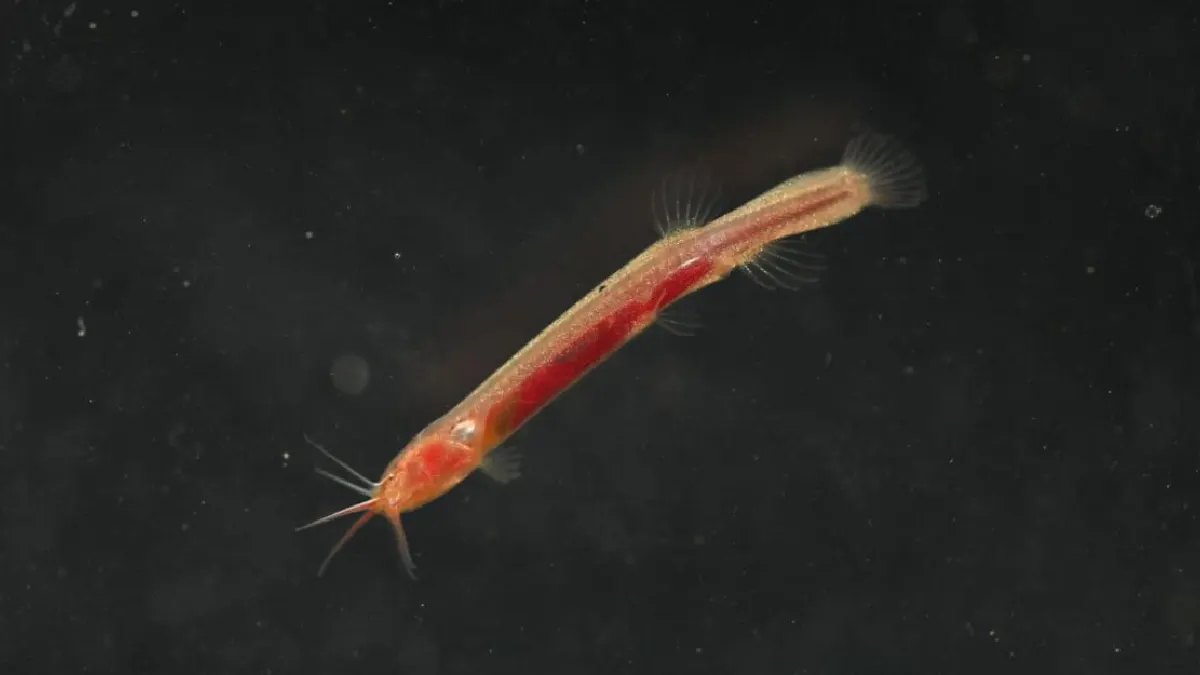
The species measures approximately two centimetres in length and has several distinctive characteristics typical of underground life:
- Completely blind, lacking eyes
- Colourless and translucent body
- Visible blood vessels and internal organs
- Lack of pigmentation
These adaptations are common among subterranean organisms that evolve in complete darkness.
The name Gitchak nakana originates from the Garo language. “Gitchak” means red, referencing its reddish internal appearance, and “nakana” refers to its blind, fish-like form.
Why This Matters for Assam and Guwahati
Although the discovery was made in Goalpara, the implications extend across Assam, including Guwahati and the greater Brahmaputra basin. The finding suggests that the region’s underground aquifers may host previously undocumented biodiversity.
For Guwahati, which relies heavily on groundwater sources in several areas, the discovery draws attention to:
- The ecological importance of subterranean water systems
- The need for sustainable groundwater management
- Potential new areas of scientific research in Assam
Environmental experts note that such findings reinforce the Northeast’s status as a biodiversity hotspot, both above and below ground.
What Happens Next?
Researchers are expected to conduct further studies to determine whether similar groundwater species exist in other parts of Assam and Northeast India. Conservation considerations may also follow, especially if groundwater habitats are found to be ecologically sensitive.
The discovery opens a new chapter in understanding Assam’s hidden aquatic ecosystems.
Frequently Asked Questions
What is Gitchak nakana?
Gitchak nakana is a newly discovered blind fish species found in a groundwater well in Assam’s Goalpara district. It is the first confirmed groundwater-dwelling fish recorded in Northeast India.
Why is this discovery significant?
The species belongs to a completely new genus within the loach family and highlights the presence of previously unknown subterranean biodiversity in Assam and the Eastern Himalayan region.