
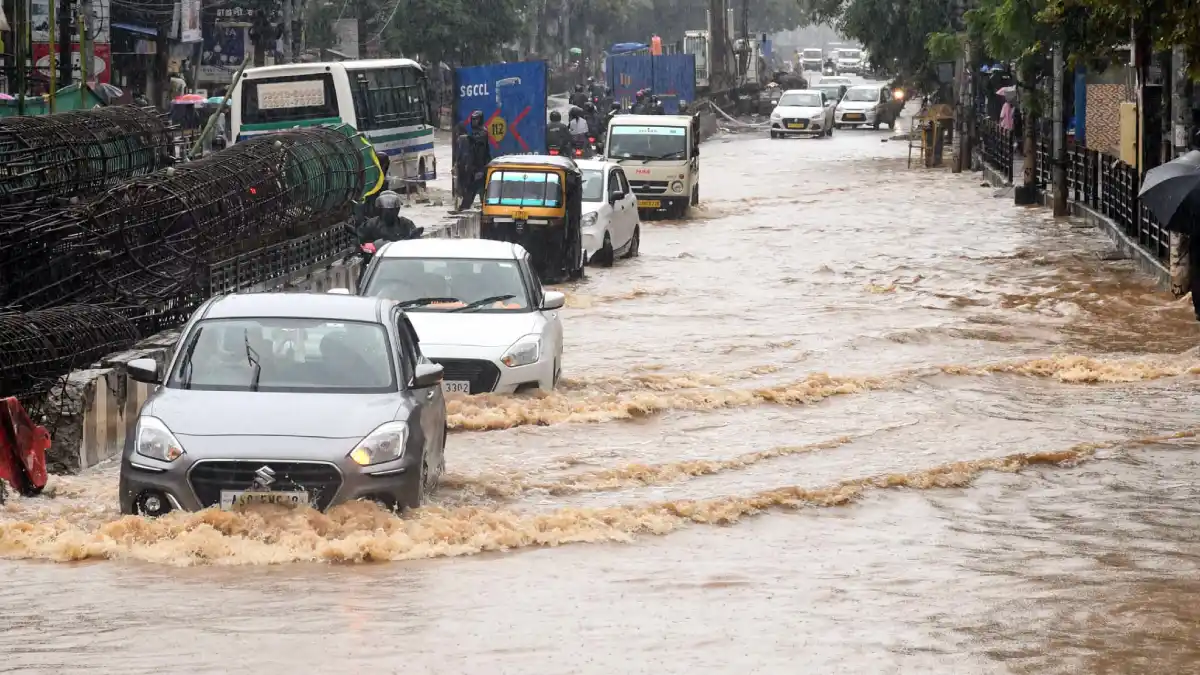
With winter receding across northeastern India, Guwahati is entering warmer days, along with renewed concerns over monsoon preparedness. Residents are questioning whether adequate preventive measures have been taken before the heavy rains arrive.
Every year, the monsoon brings waterlogging, traffic disruptions, landslides, and overflowing drains to several parts of the city. As temperatures rise, attention has shifted to whether authorities have utilised the dry months effectively.
As winter ends in Guwahati, concerns are rising over the city’s preparedness for the upcoming monsoon. Residents have questioned the pace of drain desilting and preventive measures, while Guwahati Municipal Corporation officials say nearly 40% of desilting work in core areas has been completed. Authorities aim to finish major drains before peak rainfall begins.
Monsoon Worries Return to Guwahati
Guwahati’s geography, marked by hills, low-lying areas, and proximity to the Brahmaputra, makes it vulnerable during heavy rainfall. Waterlogging in areas such as Rajgarh Road, Anil Nagar, Zoo Road, and Beltola has become a recurring issue in recent years.
Residents say the city experiences similar challenges each monsoon season, including clogged drains and slow water drainage.
Residents Question Preparedness
Anup Sarmah, a retired engineer and resident of Rajgarh Road, said the city must use dry months to strengthen infrastructure.
“We cannot pretend we didn’t know the rains were coming, because they come every single year, more fiercely now,” he said. “Winter is over. But what has the administration done during these dry months, when work is actually possible?”
Such concerns reflect broader public anxiety over recurring seasonal disruptions.
Drain Desilting Underway, Says GMC
Officials from the Guwahati Municipal Corporation (GMC) confirmed that pre-monsoon desilting work has begun across major drainage channels.
A GMC official, speaking on condition of anonymity, said nearly 40% of desilting in core city areas has been completed. “Teams are working daily, and we expect to complete the main drains in time,” the official stated.
However, some residents claim that progress appears uneven and limited to selected zones.
Why This Matters for the City
Waterlogging during monsoon months often leads to:
- Traffic congestion and delayed commutes
- Disruptions in schools and offices
- Increased risk of landslides in hill areas
- Public health concerns due to stagnant water
With Guwahati expanding rapidly, infrastructure resilience has become a key issue for both residents and civic authorities.
What Happens Next?
Pre-monsoon preparation efforts are expected to continue in the coming weeks. The effectiveness of these measures will likely be tested once the first spells of heavy rain arrive.
Residents have urged authorities to complete desilting and strengthen drainage systems before peak monsoon conditions set in. With winter officially waning, attention now turns to how prepared the city will be when the rains return.
Frequently Asked Questions
Q1. Has Guwahati started pre-monsoon preparation work?
Yes, according to GMC officials, pre-monsoon desilting of major drains has begun, with nearly 40% of work completed in core areas.
Q2. Why does Guwahati face waterlogging during the monsoon?
The city’s hilly terrain, low-lying pockets, and drainage limitations contribute to water accumulation during heavy rainfall.
Q3. When does the monsoon typically affect Guwahati?
The monsoon generally arrives in Assam around June and continues through September, bringing heavy rainfall.