
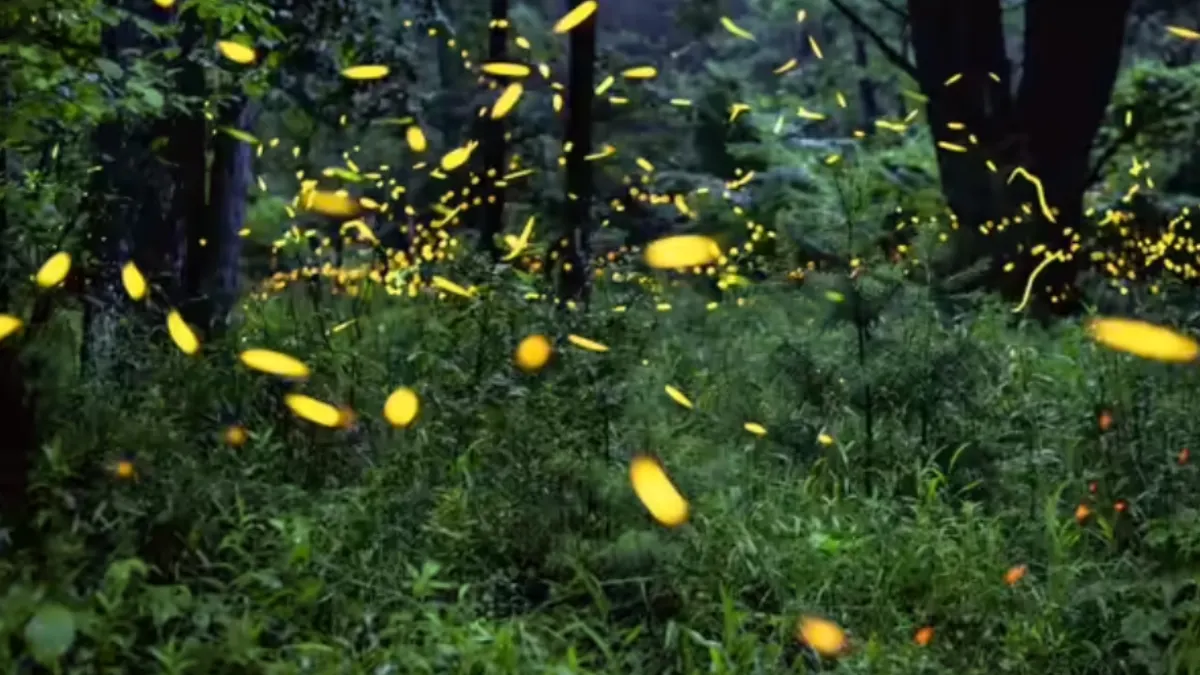
Fireflies, locally known as Jonaki Poruwa in Assam, are becoming increasingly rare in and around Guwahati. Once a familiar sight along riverbanks, wetlands, and village fields during warm evenings, sightings have significantly declined over the years due to urbanisation, light pollution, and habitat loss.
Environmental experts say that while fireflies are not officially extinct in Assam, their numbers appear to be shrinking, especially in urban and semi-urban areas of Guwahati.
Fireflies, known locally as Jonaki Poruwa, are becoming rare in Guwahati due to habitat destruction, light pollution, and pesticide use. These bioluminescent insects depend on wetlands, forest edges, and dark nights to survive. Rapid urban growth and artificial lighting are disrupting their breeding and natural communication patterns.
Why Fireflies Are Declining in Guwahati
Fireflies belong to the Lampyridae beetle family, which includes over 2,400 species worldwide. Most species thrive in warm, humid environments — conditions common in Assam.
In Guwahati and nearby areas, fireflies traditionally appeared in:
- Wetlands and low-lying fields
- Riverbanks along the Brahmaputra
- Marshy patches and forest edges
- Village outskirts with minimal artificial lighting
However, rapid infrastructure development, land filling of wetlands, and expanding residential zones have reduced their natural habitat.
Impact of Urbanisation and Wetland Loss
Guwahati has witnessed significant urban expansion over the past two decades. Wetlands and open green spaces have gradually been replaced by housing projects, commercial complexes, and roads.
Firefly larvae typically live in:
- Rotting wood
- Leaf litter
- Moist soil near water bodies
Disturbance to these ecosystems directly affects their life cycle. Pollution of water bodies and drainage systems further adds stress to their survival.
The Role of Light Pollution
Artificial light at night is considered one of the most serious threats to fireflies. These insects use bioluminescent flashing patterns to:
- Communicate
- Attract mates
- Establish territory
In brightly lit urban areas of Guwahati, streetlights, vehicle headlights, decorative lighting, and illuminated buildings disrupt these signals.
Scientific studies have shown that even temporary flashes from vehicles can interfere with synchronized flashing among certain firefly species.
Are Fireflies Extinct in Assam?
There is no official classification declaring fireflies extinct in Assam. However, conservationists warn that declining sightings in Guwahati indicate population stress.
Older residents often recall large numbers of “jugnu” lighting up summer nights along fields and riverbanks. Today, sightings are mostly limited to remote village areas and less disturbed green zones outside the main city.
Why This Matters for Guwahati
Fireflies are indicators of healthy ecosystems. Their presence reflects:
- Clean water sources
- Minimal chemical pollution
- Balanced vegetation cover
- Low artificial lighting
Their decline signals ecological changes within Guwahati’s environment.
Protecting remaining wetlands and green corridors in and around the city may play a role in restoring firefly populations.
What Can Be Done?
Experts suggest simple community-level actions:
- Preserve local wetlands and green spaces
- Reduce unnecessary outdoor lighting
- Limit pesticide use in gardens and farms
- Support urban biodiversity initiatives
Long-term conservation efforts would require coordinated planning between environmental agencies, local authorities, and community groups.
Frequently Asked Questions
Are fireflies extinct in Guwahati?
Fireflies are not officially extinct in Guwahati or Assam. However, sightings have declined significantly, particularly in urban areas, due to habitat loss and light pollution.
Why are fireflies disappearing from cities?
Fireflies depend on dark environments and moist habitats for survival. Urbanisation, artificial lighting, pesticide use, and wetland destruction disrupt their life cycle and communication patterns.