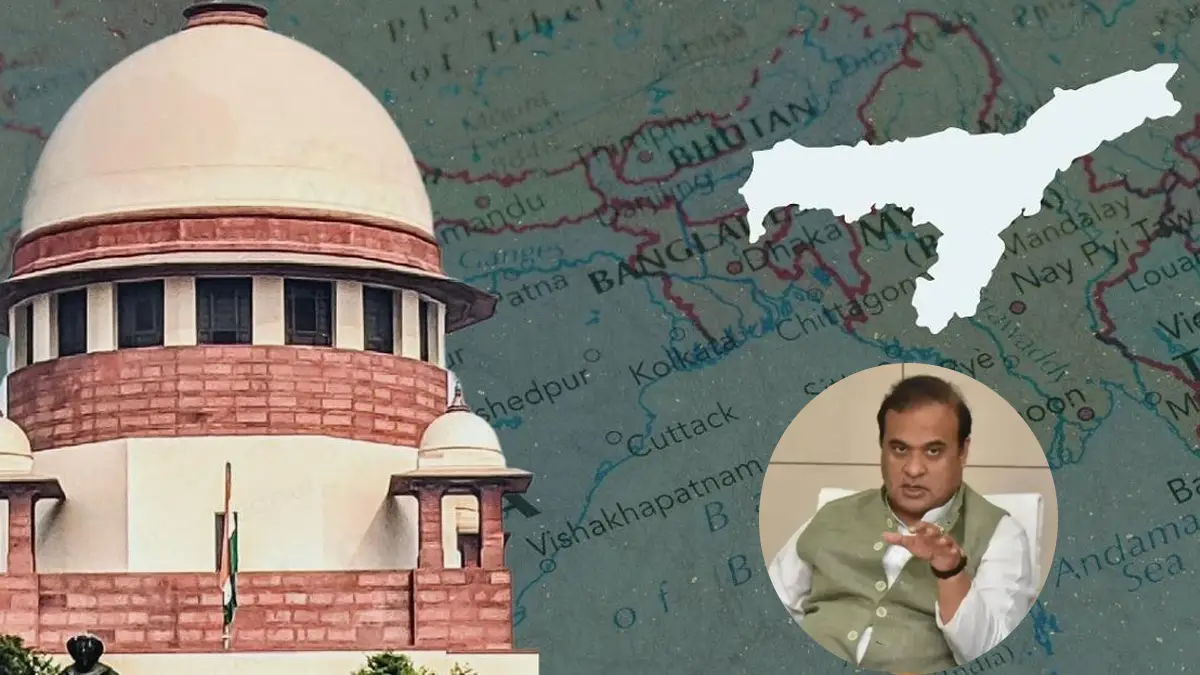
The Supreme Court of India on Monday, February 16, declined to directly hear petitions seeking action against Assam Chief Minister Himanta Biswa Sarma over alleged remarks targeting Muslims. Instead, the apex court directed petitioners to approach the Gauhati High Court, stating that the jurisdictional High Court is competent to examine the matter.
The Bench also requested the Chief Justice of the Gauhati High Court to prioritise the case, considering the urgency cited by the petitioners.
On February 16, the Supreme Court declined to entertain petitions seeking action against Assam CM Himanta Biswa Sarma over alleged remarks and directed petitioners to approach the Gauhati High Court. The apex court stated that High Courts are competent to adjudicate such matters and requested a priority hearing in Guwahati.
Supreme Court’s Observation
The Bench was led by Chief Justice of India Surya Kant, along with Justices Joymalya Bagchi and Vipul Pancholi.
The Court held that bypassing the jurisdictional High Court would undermine constitutional forums and unnecessarily burden the apex court. It maintained that the Gauhati High Court has the authority to hear and decide the matter.
By directing petitioners to Guwahati, the Court reaffirmed the principle that High Courts are the primary forums for such constitutional challenges within their respective states.
Petitions Filed Against the Chief Minister
The pleas were filed by:
- The CPI(M)
- CPI leader Annie Raja
- Assamese scholar Hiren Gohain
The petitions sought action over alleged hate speech and a controversial video shared by the Assam BJP.
According to the petitions, the video reportedly depicted the Chief Minister making remarks targeting members of a particular community and included phrases such as “Point blank shot” and “No Mercy.”
The petitions also challenged statements attributed to Sarma at a public gathering, where he allegedly spoke of removing “four to five lakh Miya voters” from the electoral rolls.
Petitioners argued that such remarks could foster hostility and intimidation and violate constitutional protections.
Arguments Before the Court
Senior Advocate Abhishek Manu Singhvi argued that the statements had nationwide implications and urged the Supreme Court to intervene directly.
He described the matter as urgent and significant.
However, the Bench reiterated that constitutional procedure requires petitioners to first approach the relevant High Court, in this case, the Gauhati High Court in Guwahati.
What This Means for Guwahati
With the matter now directed to the Gauhati High Court, legal proceedings are expected to take place in Guwahati.
The Gauhati High Court will determine whether notices are issued and whether the petitions are admitted for detailed hearing.
As Assam’s judicial centre, Guwahati will now become the focal point for further legal developments in this case.
What Happens Next?
The petitioners are expected to file or pursue their pleas before the Gauhati High Court.
The Supreme Court has requested the Chief Justice of the Gauhati High Court to prioritise the matter.
Any future legal action or directions will now emerge from proceedings in Guwahati.
Frequently Asked Questions
What did the Supreme Court decide?
The Supreme Court declined to hear the petitions directly and directed petitioners to approach the Gauhati High Court.
Why was the case not heard by the Supreme Court?
The Court stated that the jurisdictional High Court is competent to adjudicate the matter and that bypassing it would undermine constitutional forums.
Where will the case be heard now?
The matter will be heard by the Gauhati High Court in Guwahati.