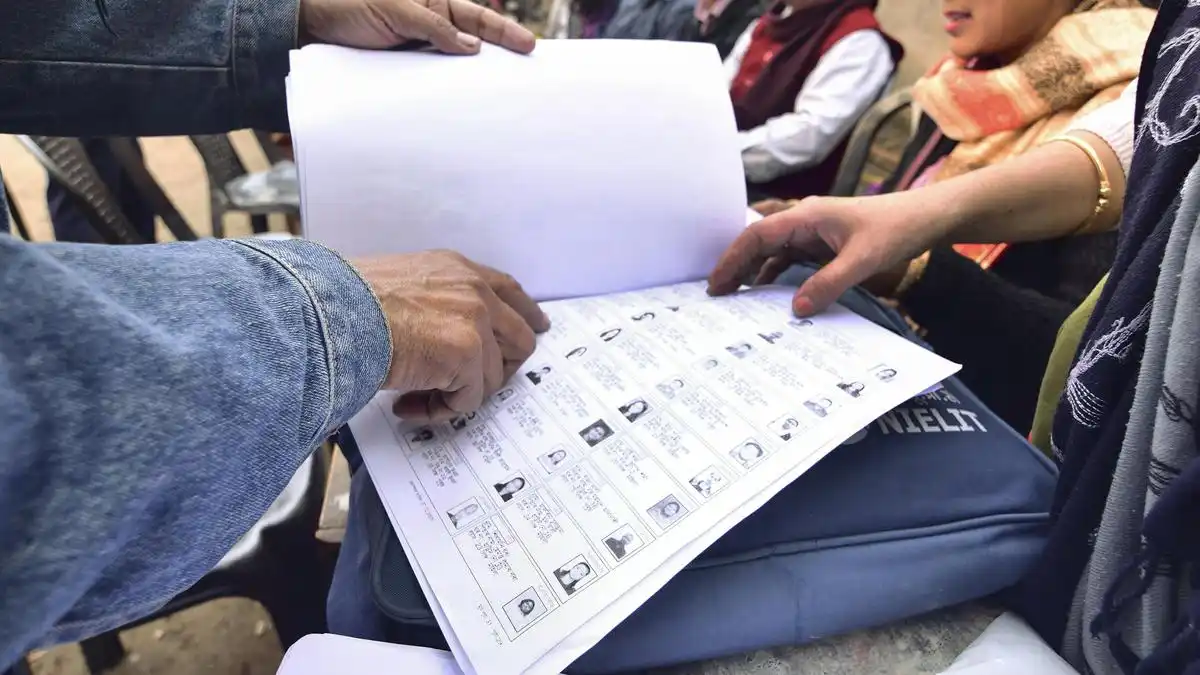
As Assam debates electoral integrity once again, Guwahati finds itself at the centre of a familiar problem: voters discovering their names missing, altered, or flagged during roll revisions, often without clear explanations.
Despite repeated exercises to clean up electoral data, the promise of an error-free voters’ list remains elusive in the city, raising concerns about transparency, accountability, and the burden placed on ordinary voters to fix systemic mistakes.
Guwahati continues to face voter roll errors during electoral revisions, with residents reporting missing or altered names and little clarity from officials. As Assam undertakes fresh roll updates, the city’s experience highlights a recurring issue: corrections meant to fix errors often create new ones, leaving voters to chase the system.
The Ground Reality in Guwahati
Across neighbourhoods in Guwahati, from older residential wards to rapidly expanding urban pockets—voters report similar experiences during roll revisions:
- Names missing despite previous inclusion
- Spelling or address errors introduced after updates
- BLOs are unable to explain why entries were flagged or removed
For many, the process becomes a cycle of form-filling, verification visits, and repeated follow-ups, often close to election timelines.
Special Revision, Familiar Problems
The ongoing Special Intensive Revision (SIR) of electoral rolls has been projected as a corrective measure. However, for Guwahati voters, it has revived long-standing anxieties.
Residents say revisions often shift responsibility downward from institutions to individuals, forcing voters to repeatedly prove eligibility for rights they already exercised in earlier elections.
Accountability Gap at the Local Level
While Booth Level Officers (BLOs) are the first point of contact, many voters say explanations for omissions are limited or unclear. Civic observers argue that:
- Errors are rarely traced back to institutional lapses
- There is no visible audit trail for wrongful deletions
- Corrective timelines often clash with workdays and mobility constraints
This gap is especially visible in Guwahati’s migrant-heavy and mixed residential zones, where address changes and documentation variations are common.
Why Guwahati Is Uniquely Affected
Guwahati’s rapid urbanisation adds complexity to electoral management:
- Frequent relocation of tenants and workers
- New apartment clusters and informal housing
- Boundary and ward changes over time
Without strong data coordination, roll revisions risk misclassifying genuine voters as doubtful or duplicate entries.
Trust and the Electoral Process
Electoral experts note that public trust depends not just on clean lists, but on fair processes. When voters feel the system is error-prone and opaque, faith in democratic participation weakens.
The issue is not unique to Guwahati, but the city’s size and political importance amplify its impact.
What Needs to Change
Voters and civic groups in Guwahati have called for:
- Clear, written reasons for deletions or objections
- Stronger accountability mechanisms for errors
- Proactive public communication during revisions
- Digital tracking of corrections and outcomes
Until such steps are institutionalised, critics say the burden will continue to fall on voters rather than the system.
What Happens Next
As revisions continue, Guwahati residents are once again navigating verification deadlines and documentation checks. Whether this round delivers meaningful improvement or repeats old patterns will shape public confidence ahead of future elections.
Frequently Asked Questions
Q1. Why do voters in Guwahati often find errors in the electoral rolls?
Rapid urbanisation, data inconsistencies, and weak accountability during revisions contribute to recurring errors.
Q2. Does the Special Intensive Revision guarantee an error-free list?
No. While intended to correct mistakes, many voters report new errors emerging during the process.