Guwahati came to a near standstill on Friday morning, January 30, after both sides of the Chandmari Flyover were abruptly shut without public warning or on-ground traffic management.
The sudden closure triggered severe congestion across Rajgarh, Chandmari, Anuradha, and GNB Road, affecting office-goers, school traffic, emergency movement, and public transport during peak hours.
Guwahati faced widespread traffic chaos on January 30 after both sides of the Chandmari Flyover were closed without warning. Despite a January 24 advisory calling for lane-wise closures, authorities shut the entire stretch from January 29 evening, choking Rajgarh, Chandmari, Anuradha, and GNB Road during peak hours.
What Happened on the Ground
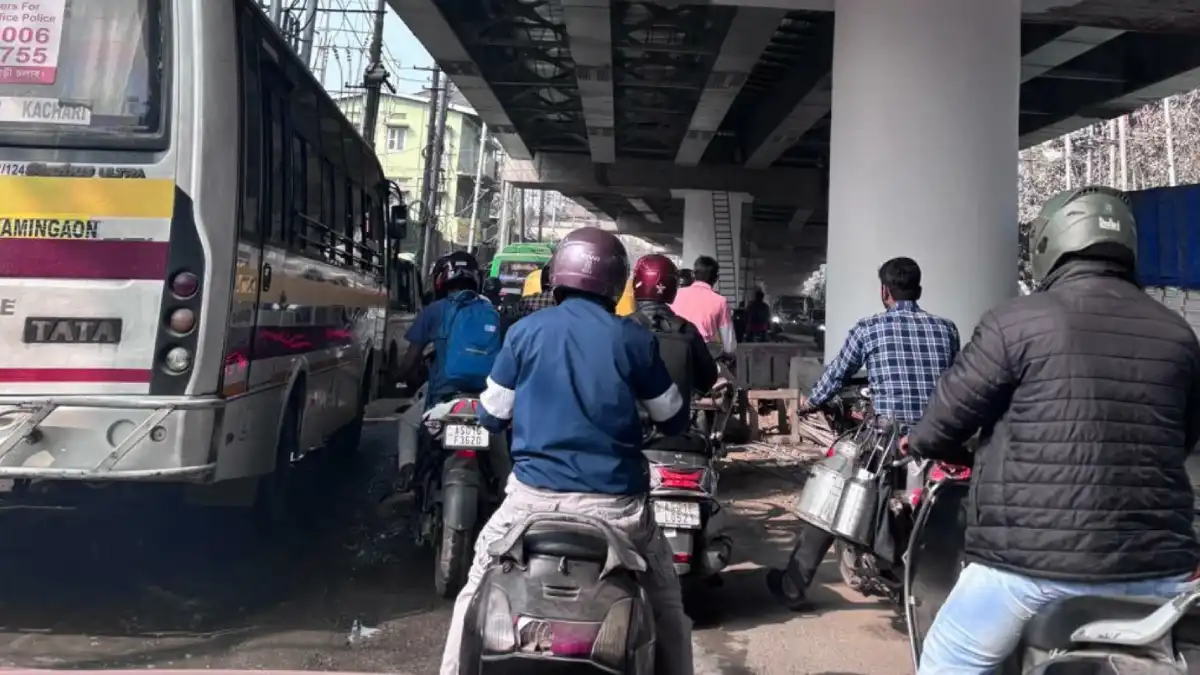
Visuals from Friday morning showed bumper-to-bumper traffic under the Chandmari Flyover, with two-wheelers, cars, buses and auto-rickshaws stuck for extended periods.
Commuters reported no traffic personnel at key junctions, no barricade signage explaining diversions, and no advance alerts issued to the public. Several motorists said travel times doubled or tripled within central Guwahati.
Advisory vs Reality
The traffic situation stood in contrast to an official advisory issued on January 24, which stated that:
- Traffic on the Chandmari Flyover would be stopped lane-wise
- Alternate lanes would remain closed for 15 days each
- The total restriction period would span 30 days
However, both sides of the flyover were shut simultaneously starting Thursday evening, January 29, with no public announcement, contradicting the advisory’s stated plan.
Areas Worst Affected
The unplanned shutdown had a cascading impact across central Guwahati:
- Rajgarh Road: Long vehicle queues during office rush
- Chandmari: Severe bottlenecks near flyover access points
- Anuradha Road: Spillover congestion from diverted traffic
- GNB Road: Slow movement due to redirected vehicles
Residents said even short-distance travel became difficult during peak hours.
“No Warning, No Planning”
Commuters and local residents expressed frustration over what they described as poor coordination and a lack of communication.
Many pointed out that Guwahati has experienced repeated disruptions during flyover works, but advance advisories and on-ground deployment were missing this time, despite the scale of closure.
Why This Matters for Guwahati
Chandmari is one of Guwahati’s most critical traffic corridors, linking residential zones with commercial and institutional areas. Any disruption, especially during weekday mornings, has citywide ripple effects.
Urban planners note that infrastructure work without synchronised traffic planning can negate the very benefits flyovers are meant to provide.
What Happens Next
As of Friday morning, there was no fresh public clarification on whether the closure would be adjusted to match the earlier lane-wise plan.
Commuters are advised to:
- Avoid Chandmari–Rajgarh stretches during peak hours
- Use alternate routes where possible
- Watch for updated advisories from traffic authorities
Frequently Asked Questions
An advisory on January 24 mentioned lane-wise closures, but the full shutdown from January 29 evening was not publicly communicated.
Rajgarh, Chandmari, Anuradha and GNB Road experienced heavy congestion during peak hours.