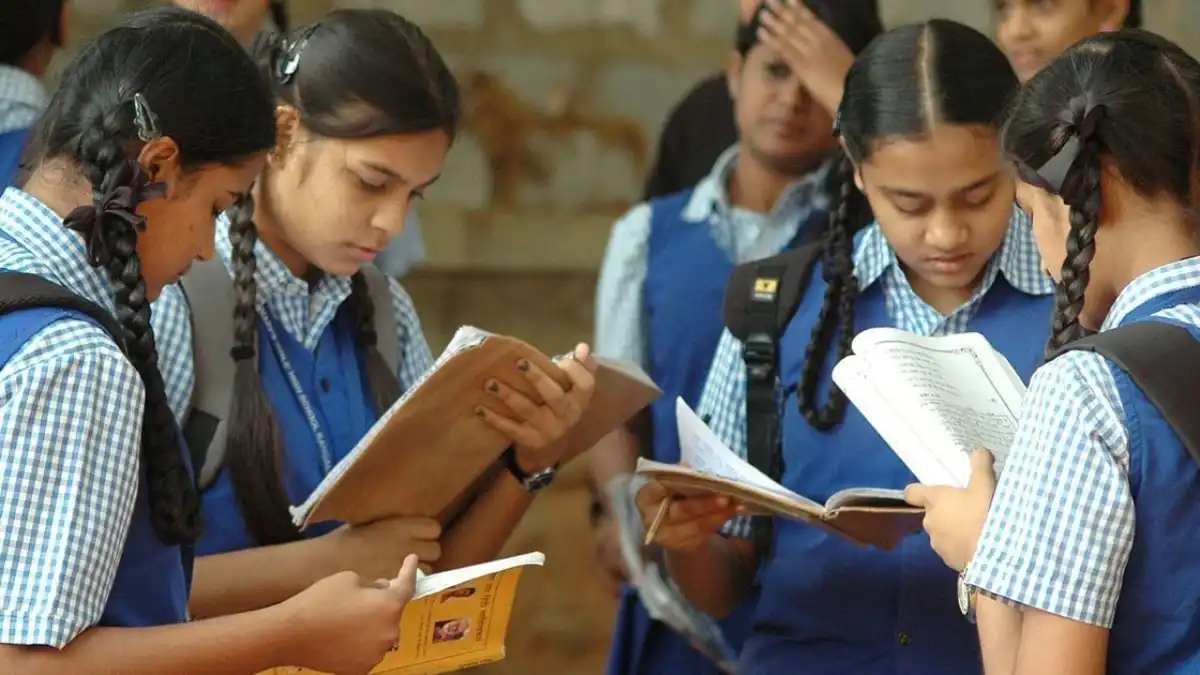
The Economic Survey 2025–26 has flagged low student retention beyond Class 8 as one of the most serious weaknesses in India’s education system, warning that secondary education remains a critical bottleneck.
Tabled in Parliament on January 29 by Finance Minister Nirmala Sitharaman, the findings carry particular relevance for Guwahati and Assam, where access to secondary schools continues to shape whether students stay in education or drop out after middle school.
The Economic Survey 2025–26 warns that nearly half of India’s students discontinue schooling after Class 8, with the net enrolment rate at the secondary level at just 52.2%. Limited availability of secondary schools, especially in rural areas surrounding Guwahati, remains a key reason for high dropout rates.
What the Survey Found
According to the survey, while enrolment has improved at the foundational and preparatory levels, the transition to secondary education remains weak nationwide.
Key findings include:
- Net enrolment rate at secondary level: 52.2%
- Nearly one in two students drops out after Class 8
- 54% of schools offer only foundational and preparatory education
This means a large number of students exit the education system just as they reach the age where skills, vocational exposure, and career pathways begin to matter most.
Why This Matters for Guwahati and Assam
Guwahati acts as the education hub of Assam, attracting students from surrounding rural districts for higher secondary and college education. However, the Survey’s data shows that many students never make it that far.
In rural Assam, only 17.1% of schools offer secondary-level classes, compared to 38.1% in urban areas. As a result, students in villages often have to travel long distances or relocate to continue their education after Class 8.
For families with limited resources, this transition frequently becomes the point where schooling ends.
Rural–Urban Divide Drives Dropouts
The Survey highlights a sharp rural–urban disparity:
- Rural areas: Enrolment steadily declines from the foundational to the secondary stages
- Urban areas: Enrolment increases as students move from middle to secondary levels
This trend is visible in Assam, where Guwahati’s schools and coaching centres see rising enrolment, while feeder districts struggle to retain students beyond middle school.
Education experts say frequent school changes, lack of transport, and safety concerns, especially for girl,s contribute significantly to dropouts.
Limited Secondary Schools a Key Barrier
The Survey identifies school availability as a central issue. With most schools stopping at Class 8, students face:
- Long daily commutes
- Hostel or relocation costs
- Disrupted learning during transitions
These barriers disproportionately affect rural and economically weaker families, many of whom depend on Guwahati’s institutions but cannot sustain the move.
Why Secondary Education Is Critical
Secondary education plays a crucial role in:
- Preparing students for higher education
- Enabling vocational and skill-based pathways
- Reducing long-term inequality
Without stronger secondary-school access, experts warn that urban centres like Guwahati will continue to see uneven inflows of students, while large sections of rural youth drop out early.
What Happens Next
While the Economic Survey does not announce new schemes, its findings are expected to inform education policy discussions, particularly around expanding secondary schools, transport support, and hostel facilities in states like Assam.
For Guwahati, the challenge lies not just in hosting institutions, but in ensuring students from across the state can reach and remain in the education system.
Frequently Asked Questions
It states that the net enrolment rate at the secondary level is just 52.2%, meaning nearly half of students discontinue schooling after Class 8.
Guwahati is Assam’s education hub, but many rural students drop out before reaching secondary school due to distance, cost, and lack of nearby facilities.