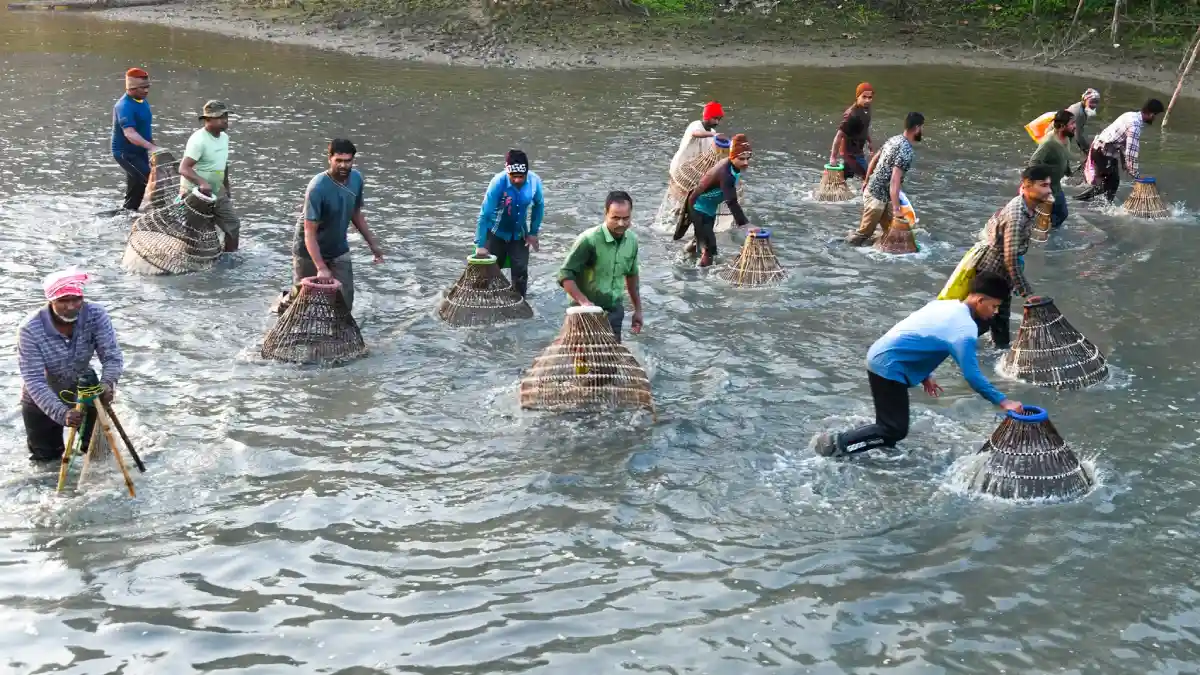
As Uruka night approaches on January 13, villages around Bomani Beel come alive with an age-old tradition of community fishing. Located on the outskirts of Guwahati in the Sonapur area, the wetland turns into a shared space where residents gather to fish together before the Bhogali Bihu feast.
From early morning, people wade into the shallow waters carrying traditional nets and simple fishing tools, many of them unchanged for generations.
Ahead of Uruka, residents from villages near Guwahati gather at Bomani Beel in Sonapur for traditional community fishing. The age-old practice, held before Bhogali Bihu, brings families together in shared celebration, preserving a cultural tradition rooted in cooperation rather than commercial gain.
A Tradition Rooted in Togetherness
The fishing at Bomani Beel is not about profit or competition. Participants say the focus is on doing something collectively, just as their parents and grandparents did. Voices calling out instructions, laughter echoing across the water, and familiar faces create an atmosphere closer to a community gathering than a fishing expedition.
For many, the fish caught during the day become part of the Uruka feast shared later at night.
A Living Cultural Space Near the City
Though Guwahati has expanded rapidly over the years, wetlands like Bomani Beel continue to preserve rural rhythms close to the city. During Uruka, the beel becomes a bridge between past and present, where traditional practices coexist with the city’s growing urban landscape.
Elders often guide younger participants, passing down not only fishing techniques but also stories linked to the beel and its seasonal cycles.
Beyond Festivals: Daily Importance of Beels
Beels like Bomani play a role far beyond festival days. Throughout the year, they support daily food needs and provide livelihood opportunities for families living around Guwahati’s outskirts.
In Assam’s Brahmaputra valley, wetlands have long shaped rural life, where fishing, farming, and seasonal festivals are closely interlinked.
Why This Matters for Guwahati
As Guwahati grows, traditional spaces such as Bomani Beel highlight the importance of protecting wetlands that sustain both culture and livelihoods. Community fishing during Uruka reflects how traditions adapt and survive even as urban boundaries expand.
For city residents, scenes from Bomani Beel serve as a reminder that Bhogali Bihu is not only about feasts, but also about shared effort and collective memory.
What Happens Next
By evening, the fishing winds down as participants return home to prepare for Uruka night celebrations. With Magh Bihu the following morning, the beel gradually returns to its quieter routine until the cycle repeats next year.
Frequently Asked Questions
Q1. Where is Bomani Beel located?
Bomani Beel is located near Sonapur on the outskirts of Guwahati.
Q2. Why is community fishing done before Uruka?
The practice symbolises togetherness and tradition, with fish often used for the shared Uruka feast during Bhogali Bihu celebrations.